

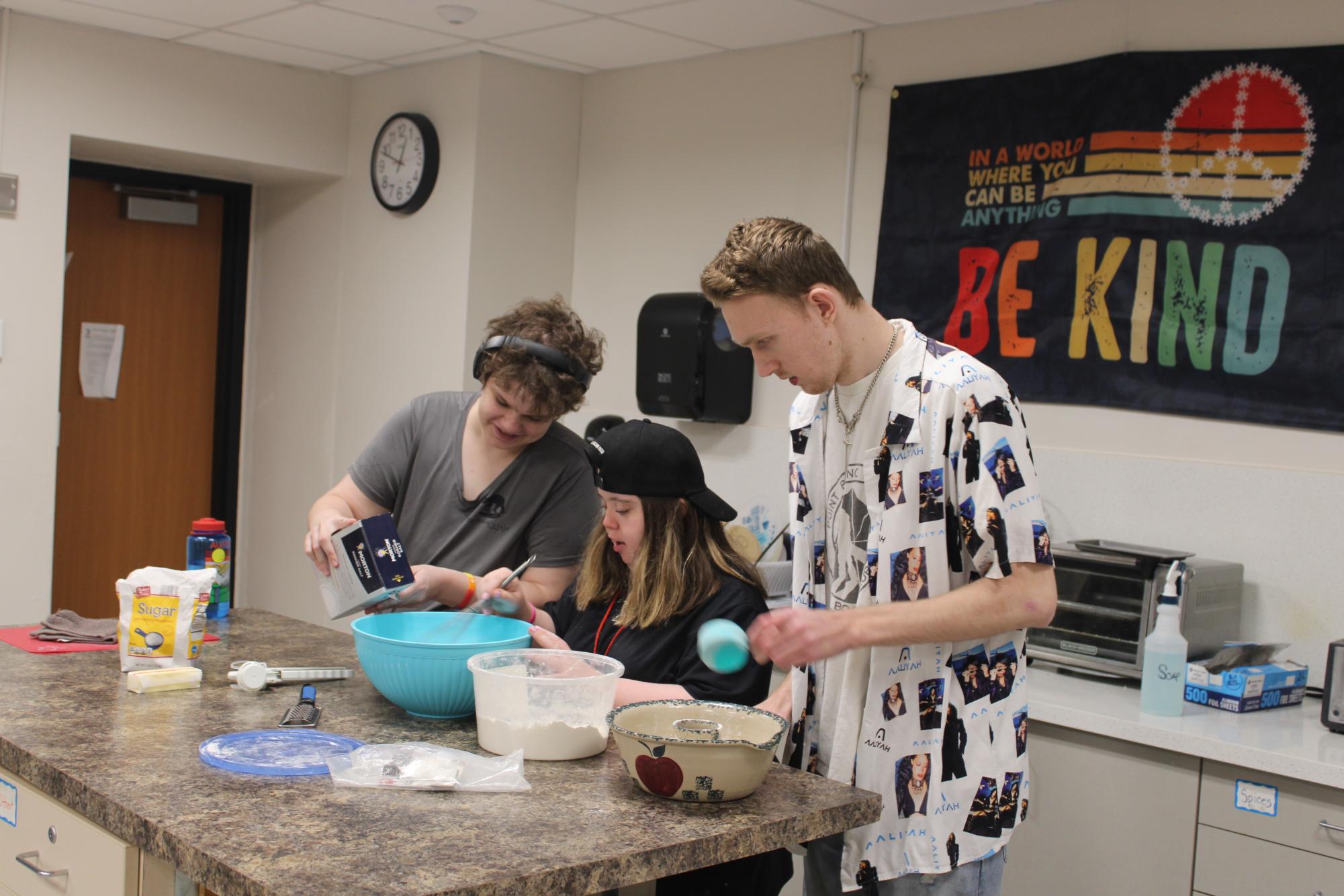
Transition Plus is a program at the Lenox Community Center for 18-22-year-olds in the Park and Hopkins districts with disabilities and additional needs. It aids in preparing them for employment, further education and independent living.
Transition Plus student Blake Lewellen said the program is beneficial for learning life skills and preparing for employment. He said the staff helps by providing a safe and accommodating environment.
“(Transition Plus) is a good place to go to,” Lewellen said. “You’ll be able to learn life experiences and how to get a job and be around people in the community. The teachers (are) supportive of each other (and) the kids. They treat people with respect.”
Transition Plus student Maddy Sahlstrom said Transition Plus teaches fundamental skills for adulthood. She said the program has various classes and internships, such as financial literacy courses and workplace opportunities.
“(Transition Plus) is a program for teaching skills on transitioning from childhood to adulthood,” Sahlstrom said. “Some classes that they teach here are financial literacy (which entails) learning how to do your taxes, and they also have internships to help find your way around a job site.”
According to program coordinator Alaina Martin, the purpose of Transition Plus is to help students achieve their goals after high school. She said the program provides resources for students to support the objectives of their individualized education programs (IEPs).
“When students are done with their senior year of high school and they still haven’t met (their) IEP goals and still need some time, they can come to Transition Plus and take classes and go to job sites that help support those goals,” Martin said.
Sahlstrom said being around friends at the program is enjoyable and keeps the classroom relaxed. According to her, self-advocacy is important, and the staff is very knowledgeable, so questions are welcome.
“I like hanging out with my friends,” Sahlstrom said. “They keep it chill and help me to be my best self. These teachers know what they’re doing, listen to them and advocate for yourself. They’re here to help. Don’t feel awkward about asking questions or asking for help.”
Martin said she enjoys seeing past students from her previous high school teaching job at Park. She said she is grateful to see students’ joy and to help them in the process of planning their futures.
“I previously worked at the high school,” Martin said. “Some of my students went on to Transition Plus, so when I started over here, I saw familiar faces of students who were in my classes at the high school, so that was fun. It’s great to see the successes and joy (students) have out of the things they’re doing. (It’s) one of my favorite parts about the job. (I love) being able to help with that process of them figuring out themselves (and) what they’re going to do with their life.”
Sahlstrom said her favorite part of the program is working at the food shelf, because it helps prepare for navigating a job environment, and the staff is pleasant to work with. She said there are opportunities for students to make money and be an active member of the community.
“I volunteer at a food shelf on Mondays, and I like doing that because it’s good training for finding my way around a workplace,” Sahlstrom said. “The people managing the volunteer work there are pretty nice. This program offers ways to give back, to make money with paid internships and (to) pick out what you might want your major to be.”
Martin said students have found success in the program through opportunities such as work opportunities, joining nonprofits and taking college classes. According to her, through Transition Plus and its resources, many of her students have found the program beneficial.
“Students who come to Transition Plus may have limited skills (to) live independently in the future,” Martin said. “Students (work) at Nordic Ware and Dunn Brothers, deliver mail at both district offices (and) go to job sites at different food shelves (and) nonprofits. We have classes at Hennepin Technical College (where) students learn about career pathways. There’s a lot that the program offers, and a lot of students have found it as a very helpful step.”
Sahlstrom said she occasionally has a hard time staying engaged with the school curriculum, and including more student input would help improve engagement with coursework.
“I find some trouble occupying myself when we’re not really doing anything,” Sahlstrom said. “Sometimes the curriculum can feel like it’s a little bit too easy. I’d like (staff to) ask the students more about what kind of stuff they want to learn about. More student input on the curriculum and more interactive lessons (would be helpful).”
Lewellen said after the program, he hopes to live independently and be an entrepreneur. He said he would like to start a graphic design business to fulfill his passion for art.
“(My goals are) starting my own business, a graphic design business to sell art, and getting my own place to live in, to learn to live by myself,” Lewellen said.
Sahlstrom said her goals in the future are to find a job and start saving money. She said she would like to save up for her own apartment as well as vital yet expensive gender-affirming healthcare.
“During Transition Plus, one of my goals is to get a part-time job and start saving up money for an apartment (and) also for gender affirming care, because that is expensive and not covered by insurance,” Sahlstrom said.
Martin said many students have found success in meeting their goals, such as getting a job, working independently and getting their driver’s licenses. She said working with young adults with disabilities has helped her realize that each student has their own set of unique talents and abilities.
“A couple of our students have gotten hired to work outside of the school day without job coach support, and so that’s a big success,” Martin said. “We’ve had students who have used our transportation class to get their licenses. When you work with adults with disabilities, you see that every student has a lot of strengths, and you’re able to see every student through that lens, rather than focusing on what they can’t do. Every student has the ability; they just need the chance to practice.”