
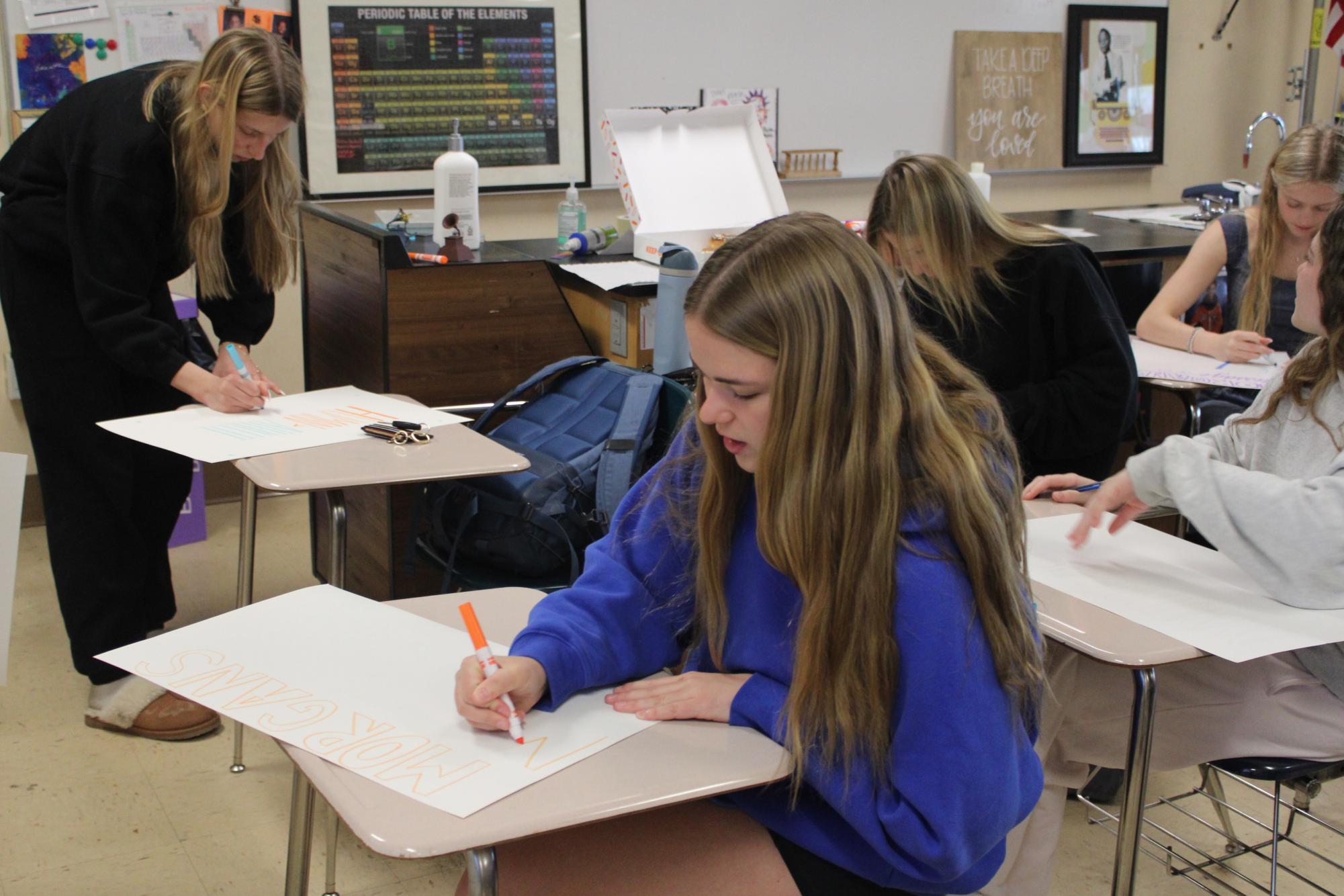

Morgan’s Message is a national non-profit, centered around lacrosse and sports in general, working to eliminate the stigma of mental health in student athletes in high school and college-level sports. The organization was founded in memory of Morgan Rodgers, a college lacrosse player who took her own life at the age of 22 in 2019. Many high schools have chapters of Morgan’s Message, where they focus on organizing dedication games to the cause and promote the messaging of “Human > Athlete,” putting the person themselves before their ability in their sport. This school year, Park lacrosse players started a chapter of Morgan’s Message to make an impact in our own community in sports.
According to junior club founder Lola Grimm, her first experience with Morgan’s Message was with playing lacrosse, but she recently decided to get more involved. She said the purpose of Morgan’s message is one that commonly goes unseen, and she wanted to bring it more attention.
“I’ve always done dedication games for lacrosse, and this summer I applied to be an ambassador and looked more deeply into the message because I think that it is so important and something that is so overlooked. I wanted to spread (the message),” Grimm said.
Club advisor and lacrosse coach Alex Polk said stopping to acknowledge the mental health of athletes is important and something that has different elements to it, especially in sports. He said it’s important to prioritize yourself as a human before yourself in your athletic performance.
“Mental health is really important, and it’s really important to acknowledge a lot of the different factors that impact that,” Polk said. “For athletes, how they perform is going to be a factor. Being able to take the time to slow down, write positive messages, prioritize self rather than focusing just on the next game, next shot, the next goal.”
Junior June Davis said Morgan’s Message is important because it sheds light on a topic that many people don’t always talk or think about with sports. She said it’s important to bring attention to athletes’ mental health and have more conversations about it.
“The message is important because it’s something that people don’t always think about, don’t always think about student athletes who have killed themselves or are struggling with their mental health,” Davis said. “This is often something that’s just not talked about enough. It’s important for people to talk about it and spread the word about (the importance) of mental health in sports.”
Grimm said she cares deeply about Morgan’s message due to her involvement as a lacrosse player and an ambassador for the organization. She said the message is important for schools everywhere.
“Morgan’s Message is important to me because I’m an ambassador (of the program) and I play lacrosse, which is the sport that (Morgan’s message) is centered around,” Grimm said. “I think it’s a really important message at our school and (important) to spread to all schools.”
According to Davis, the club is fostering a space of community that can allow Park athletes to have a space to talk about mental health without feeling overwhelmed or intimidated.
“(The club) is bringing attention to (Morgan’s Message), and if someone is struggling, they have a club that they could go to and talk about it, or to feel like they have a space to not feel stressed or pressured by the people,” Davis said.
Polk said he hopes to see Morgan’s Message being promoted visually around the school for all to see as the club grows. He said it’s important for student-athletes to focus on who they are and know their worth, rather than only in their sport.
“I (hope for) the messaging of student greater than athlete to be (visible),” Polk said. “I’ve seen people write it on whiteboards and I’ve seen it around the school a couple more times, which is really cool. Being able to foster a community of positivity and self-worth that is more surrounded in more of who they are rather than what they do.”
If you or anyone you know is experiencing struggles with mental health, there are resources for you, including the 988 Suicide and Crisis Lifeline and the National Alliance on Mental Illness (NAMI).