


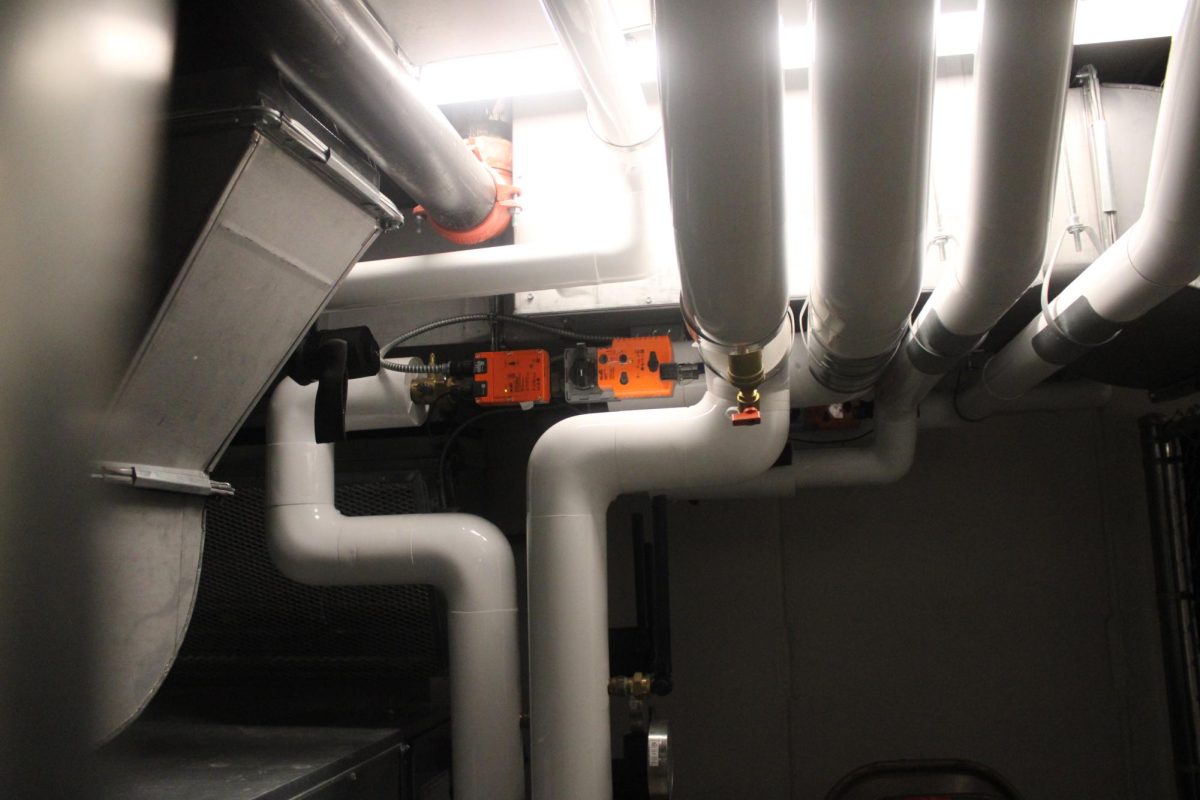
At Park, a common complaint from students is, “It’s so hot in this classroom!” Especially as the temperature outside rises, certain classrooms begin to feel like learning inside a fiery furnace. Classrooms vary in temperature throughout the year, creating an uncomfortable environment for students to learn.
Junior Hazel Patrick said the heat in some classrooms is intolerable. They said the school’s temperature varies throughout the day depending on the weather outside.
“(The temperature) is really bad,” Patrick said. “I have such a low heat tolerance, and I sit in my classes sweating every single day. If I wear a long sleeve, I’m gonna sweat. (But) if I wear a short-sleeved shirt, I’m gonna freeze because it’s always cold in the mornings.”
Senior Kat Williams said the art and pottery classrooms are the most uncomfortable. She said the lack of air conditioning in said classrooms is a problem.
“In the art room and in the pottery room, it literally feels like a sauna,” Williams said. “Waiting until the last two weeks of school to turn the air conditioning on doesn’t really seem like a good idea; it just seems pointless at that point.”
According to art teacher Molly Timmerman, her classroom temperature has been as high as 80 degrees in the past. She said she’s heard many complaints from students about the temperature.
“(My classroom is) warm, but the past couple of weeks, it’s been in the upper 80s,” Timmerman said. “It’s been very hot, and students have said that.”
According to math teacher Erik Ahlquist, Park has a set date to turn off the boilers and activate the air conditioning. He said he’s been told it is difficult for the school to change this.
“I know the school does not turn off the boilers and on the air conditioners until a certain date,” Ahlquist said. “That seems to be a difficult thing for them; that’s the story I’ve been told for years.”
Patrick said they find the heat to be consistently irritating. According to Patrick, other students could have difficulty paying attention in class as a result.
“The second I get into the school, the heat is turned all the way up, and it’s 1000 degrees in there. It’s horrible, (and) it makes me really annoyed, constantly,” Patrick said. “It could probably have (students) too distracted with the heat and the temperatures to actually be paying attention to what they’re supposed to be doing.”
Williams said excessively warm classrooms make her drowsy and give her little energy to learn. She said she finds herself tired and dozes off in class.
“Honestly, (the heat) makes me more tired,” Williams said. “In my personal finance management class, it’s warm in there, and I’m almost falling asleep in class.”
Timmerman said students’ learning and comfort were compromised due to the climate. She said it also made it difficult for her to teach.
“When it was as hot as it was a couple of weeks ago, it was almost impossible to focus and learn,” Timmerman said. “It was really hard for everybody; people were extra tired. You couldn’t move comfortably around the space. There (were) a lot of heads down and kids (were) not working or engaging in the learning, and it was hard for me to teach too.”
Ahlquist said teachers have been told not to open the windows, but it’s the only way to provide ventilation in the classroom. He said opening the windows still does not suffice for proper ventilation.
“There (are) some times when it’s super hot in our room, but we’re not supposed to open our windows,” Ahlquist said. “People tell us not to, but (when) it becomes unbearable, you just have to open the windows. Sometimes, that doesn’t even help because there’s not a ton of ventilation that goes through.”
Patrick said the lack of air conditioning until May was a contributing factor in the matter. They said due to the colder morning weather, heat was needed.
“It was really cold in the mornings; it’s kind of warmer now, but they (had) to turn the heat on to keep it warm, but then they turned it up too high,” Patrick said. “For now, they aren’t allowed to turn the air conditioning on until May.”
Williams said there is a risk of fainting due to the lack of air conditioning. She said turning on the air conditioning should be a priority to make classrooms comfortable for learning.
“Hopefully no one passes out, but it is a possibility,” Williams said. “They don’t have their air conditioning on, and it’s been like 80 to 90 degrees outside. I think it’s pretty important as the temperatures get hotter; schools should be at a comfortable temperature to learn, and if they can’t get their conditioning on, they can definitely find somebody to turn it on.”
Timmerman said adults in the building have alerted custodians about the issue in her classroom. She said her concerns were overlooked, which is unfair to those who have to teach and learn in such an environment.
“Some adults came in (the classroom) and said (they’d) talk to the custodians about it,” Timmerman said. “I was told that it was fine, and I didn’t feel very heard. I don’t think that’s fair to students. If we want students and teachers to be operating at their best, they need to be in an environment where they can learn, and having a classroom that isn’t too hot is an important part of that.”


