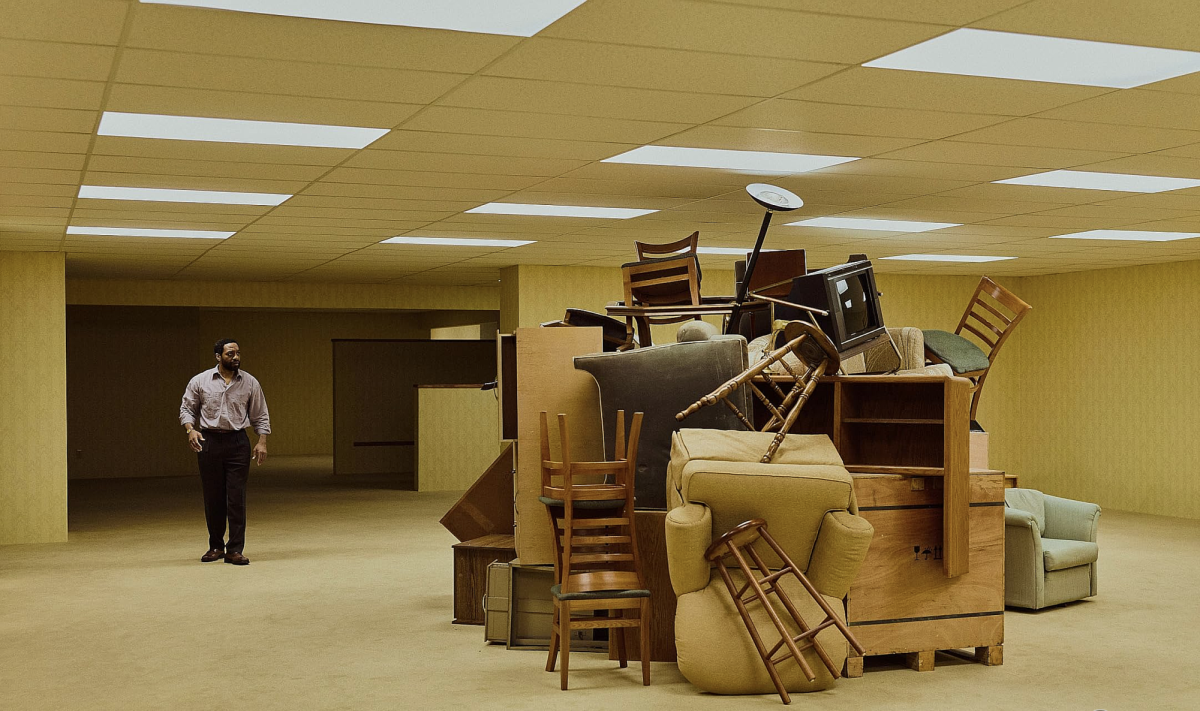

J. Cole, one of the most respected and introspective voices in hip-hop, has released what many consider to be his last studio album, “The Fall Off,” on Feb. 6. This long-awaited album from Cole is grounded in lyrics and storytelling, self-produced sound and personal connections to his hometown of Fayetteville, North Carolina. This album doesn’t concern itself with the trends or charts of the music industry, but instead stands as a personal reflection on Cole’s success, regret, love and the cost of making it big. The album feels like a culmination of everything Cole has built up since the release of his debut mixtape, “The Come Up.” Cole’s sound on “The Fall Off” stays rooted in hip-hop, but it spans multiple eras within the genre. Boom-bap drums, jazz aspects, acoustic guitar intros and modern trap are all experienced in the album. This range also mirrors Cole’s career by itself, recalling the vibe of “Friday Night Lights,” the hometown pride of “2014 Forest Hills Drive” and the self-analysis of “4 Your Eyez Only” and “KOD.” Cole, in this album, refines what he has always done best: storytelling that feels lived-in, honest and emotionally grounded.
One of the album’s strongest songs, and one of my personal favorites, is “SAFETY,” a boom-bap, jazz-influenced song, sung by Cole from the perspective of one of his old friends from Fayetteville. In this song, Cole allows someone else to narrate his story, calling him simply “Jermaine.” Lines like “I know the whole world is blowing up your phone, I wanna know when you’re coming home” show that, back home, he’s just seen as a neighbor who made it out. The song touches on survivor’s guilt, experiences in the hood and the opportunity that comes with sudden wealth, echoing themes Cole has explored since “Born Sinner,” another album of his.
Another standout track, “Legacy,” captures regret with clarity. The song revolves around loneliness, impulses and the fallout of past choices. Cole frames the song around the idea of sending a text you know you shouldn’t have. It’s a quiet but strong moment, one that connects to a theme of emotional weight Cole has embraced in the later stages of his career.
“Bunce Road Blues” (feat. Future and Tems), another one of my personal favorites, stands as one of the album’s most complete tracks, elevated by The Alchemist’s production and the spectacular vocals from Tems. Cole shows humility in this track, describing how he still moves through his old neighborhood like a regular, despite his fame. This is similar to the theme of his fan favorite album, “2014 Forest Hills Drive,” in which your home is not something to leave behind but rather something to bring with you. Futures’ presence on the song strengthens the theme of navigating success, while Tems adds emotional depth to the song’s tone.
J. Cole’s maturity is striking, to say the least, on “39 intro,” which parallels earlier Fayetteville-centred tracks. The acoustic opening feels familiar to other songs on the album, but the perspective has changed. Cole is 10 years older than he was on “29 intro” and earlier songs on the album. The difference is big. When the beat switches midway through, his flow sharpens, sounding more confident and wanting to prove himself. I believe it shows the album’s deep theme to understand and not impress.
Love and commitment take a larger part in “Life Sentance” one of the album’s more personal tracks. The song is framed as a love letter to his lifelong partner. The song tells their story from childhood to adulthood, through temptation and self-reflection. Cole changes the meaning of the title, not seeing marriage as a punishment but more like a choice to grow together with a loved one. The vulnerability in the song marks a significant change from Cole’s earlier work, where love was often second to his goals.
Not every moment on “The Fall Off” reaches the same emotion as other tracks. “WHO TF IZ YOU” is impressive in flow and technicality, but it takes some time to find its footing. The initial beat feels underwhelming compared to others, though the later switch into a more modern sound helps redeem the track. While not a low point, it stands out as less impactful compared to the album’s strongest moments. The same can be said for “Bombs in the Ville,” which I believe is outshined by the song right after it, that being “Hit the Gas,” another favorite of mine of the album.
Overall, “The Fall Off” will deeply resonate with listeners who value lyricism and storytelling. It is not an album built for club rotations or viral moments, but for fans willing to sit with the music and absorb its meaning. I believe that is what makes this album different from popular hip-hop albums from the past few years. Longtime J. Cole listeners will recognize callbacks to nearly every phase of his career, while new listeners may find another example of an artist aging within hip-hop.
My overall rating for “The Fall Off” is a four out of five. While not flawless, the album succeeds in being emotionally honest, that being reflecting on relevance rather than basking in it. This album offers listeners a final look into the mind of an artist who never stopped being himself. If this truly is his last album, “The Fall Off” stands as a powerful reminder that long-term success in hip-hop is built on authenticity and sticking to one’s roots.
“The Fall Off:” ★★★★☆