
Echo has taken on the task of breaking down Park’s mission statement into five parts, diving into how each aspect of the mission is fulfilled and how it continues to be achieved. Over five weeks, each part will consist of a three-source story, a photo gallery, a podcast and a video featuring the voices of students, staff, administration and outside experts. The mission statement we’re breaking down is “Park Public Schools sees, inspires and empowers each student to achieve academic excellence and live their brilliance in a racially equitable learning environment that centers student voice and experience to energize and enhance the spirit of our community.”
What does academic excellence mean for students? It might mean access to rigorous college-level courses and coursework, exceptional teachers and staff, out-of-class help and tutoring or college access and future career-oriented programs, all of which Park provides. But academic excellence looks different for every student; catering to all their needs and pushing kids to apply themselves can be difficult. Has Park been succeeding in their mission?
Science teacher and Orioles Nest co-founder Mark Miller said academic excellence looks different for every student, and a teacher’s job is to drive students to fully dedicate themselves to the work they are doing.
“Success can be different for different students,” Miller said. “My job is to help students reach the highest level of achievement that they possibly can within the time constraints, material constraints and technology constraints that we have in the building. My job is to push them as hard as they want to be pushed. If they can stay dedicated to a project or a problem or whatever it is that they’re doing in any class, if they can stay engaged and if they can produce the highest level of work that they possibly can, given the constraints, that, to me, is success.”
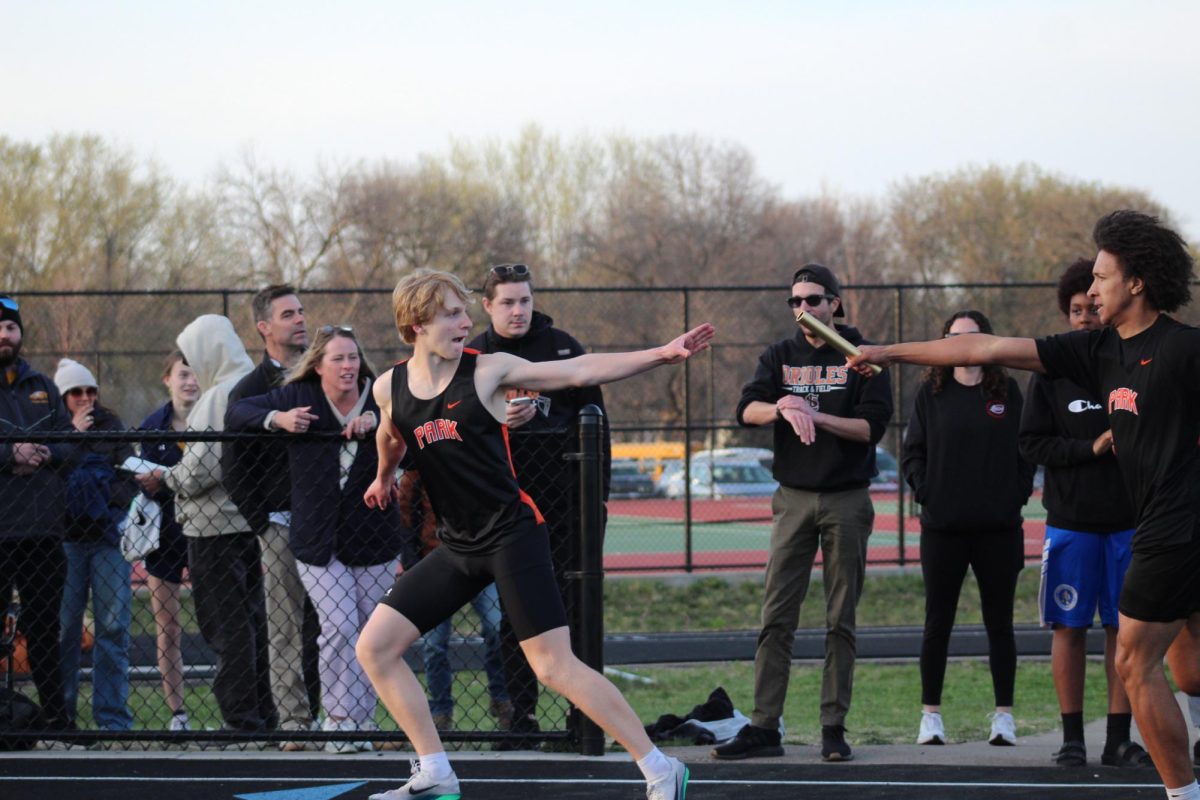
At Park, academic excellence is not just defined by letter grades and test scores. To help students achieve academic excellence means to prepare them for their success in future endeavors like college, jobs or other pursuits, which means learning skills and work ethic, not just facts and equations. One way the high school does this is through its large selection of clubs and extracurricular activities that add to a student’s resume in terms of work and post-secondary options, give them a median in which to apply themselves and add a sense of community within the school.
Senior Maggie Tight said clubs at the high school were a way that she became more involved in the community at Park. She said having something to dedicate yourself to can help increase involvement in other areas of the school, and that Park has enough variety to cater to anyone’s interests.
“Having something you’re passionate about and care about improving adds a lot to who you are as a person,” Tight said. “I’d say that (clubs) didn’t necessarily help with academics, but they do help me feel like I’m more of a part of the school and just another thing to dedicate myself to. Our school has lots of new clubs popping up recently, and we have such a wide variety. If you are interested in community service, there’s something for you. If you’re interested in the environment, there’s a club for you. The Student Council is involved in Park Pride and student connection. There are a lot of diverse ways you can do what you like to do throughout many different clubs.”
Another way Park helps students achieve academic excellence is through PSEO and internship programs, where students can gain college or work experience through the school. The choice that students have regarding resources to prepare for different pathways after high school, whether that be joining the workforce or pursuing higher education, highlights Parks’ full involvement in their commitment to a high level of academic excellence.
Senior and full-time PSEO student Maddie Grecco-Rosen said a large part of her academic success was due to her teachers’ understanding of and availability to meet her needs. She also said being at Park gave her the outline for a successful senior year as a PSEO student.
“My teachers were always extremely approachable and really seemed passionate about teaching, which also made learning more fun. I also think Park gave me a good starting point before I went to take classes at Normandale, and they helped me see that academic success was possible if I stayed engaged and put in the work,” Grecco-Rosen said.
According to Miller, Park offers many programs outside of school to help students succeed in the classroom. He said it’s important for teachers and others to be willing to work with students after school hours to provide the highest level of support.
“The Orioles nest is an excellent step in the direction of providing kids opportunities to work with teachers and other staff members. We’ve got the writing center here now as well,” Miller said. “So, we’re well on our way to providing kids opportunities to get the support they need to reach whatever level of success they want to reach. I think for a school our size, we definitely have a lot of resources there for kids to challenge themselves and be successful.”
Tight said she did not lean towards PSEO because of the presence she expects her teachers to have in the classroom. She said being able to have stronger relationships with her teachers at Park accelerated her learning.
“Personally, I feel like the best way I learn is just in the classroom and having the ability to go and ask a teacher a question. I’m big on asking questions and making sure I understand everything completely,” Tight said. “I felt with PSEO, it’s a lot harder to have that kind of relationship with your teacher, and I just wanted to make sure I could get all my inquiries answered in person and ask follow-up questions.”
According to Grecco-Rosen, PSEO taught her to have a level of academic independence that motivated her to push herself more often. She said PSEO helped her become more accountable as a student.
“PSEO taught me a lot about how to be a good student, because there wasn’t pressure from my teachers anymore to do stuff, there wasn’t someone holding my hand in a way, reminding me to get stuff done. I realized that no one was going to do the work for me, and it really was just on me to make sure that I was turning in my work,” Grecco-Rosen said.
Miller said to push students, teachers first have to develop a personal relationship with them. He said helping students see how their learning in the classroom will lead to opportunities later in life should be emphasized to provoke motivation within students.
“The key to getting students motivated is getting to know them right, making those connections,” Miller said. “But that still isn’t guaranteed to motivate them. I think (teachers) are called more than ever to help kids make connections between their education and a career after high school. And I think if we can help kids see a pathway instead of just, ‘oh, I’m sitting in math class,’ it would motivate kids more. It’s really hard to motivate kids when they can’t see that everything that (they) do will ultimately lead to something, and we need to do a better job of helping kids see that the skills that they are learning are going to lead them in some direction. Helping them see how those skills will connect with something outside of these walls is critical to motivating kids.”
According to Tight, the school has room to improve when it comes to promoting its college-level or AP classes. She said these classes are possible for any student to achieve success if they put their mind to it, and need to be marketed as such.
“As a school, we could do a better job of advertising the AP classes and the harder classes and getting students the help they need. Obviously, you have the Orioles nest and after-school help, which I think is a great thing that we do, but I think that it should be advertised like anyone can take an AP class and anyone can be a successful student, as long as they apply themselves,” Tight said.
Grecco-Rosen said Park has personally given her the opportunities to push herself academically that she desired, and that those opportunities also came along with resources for her to be successful in her learning.
“The school offered a lot of chances to challenge myself, whether that was in honors classes or other opportunities. I also felt that there were always a lot of resources and people to talk to if I needed help with anything,” Grecco-Rosen said.