

The spectrum of smarts


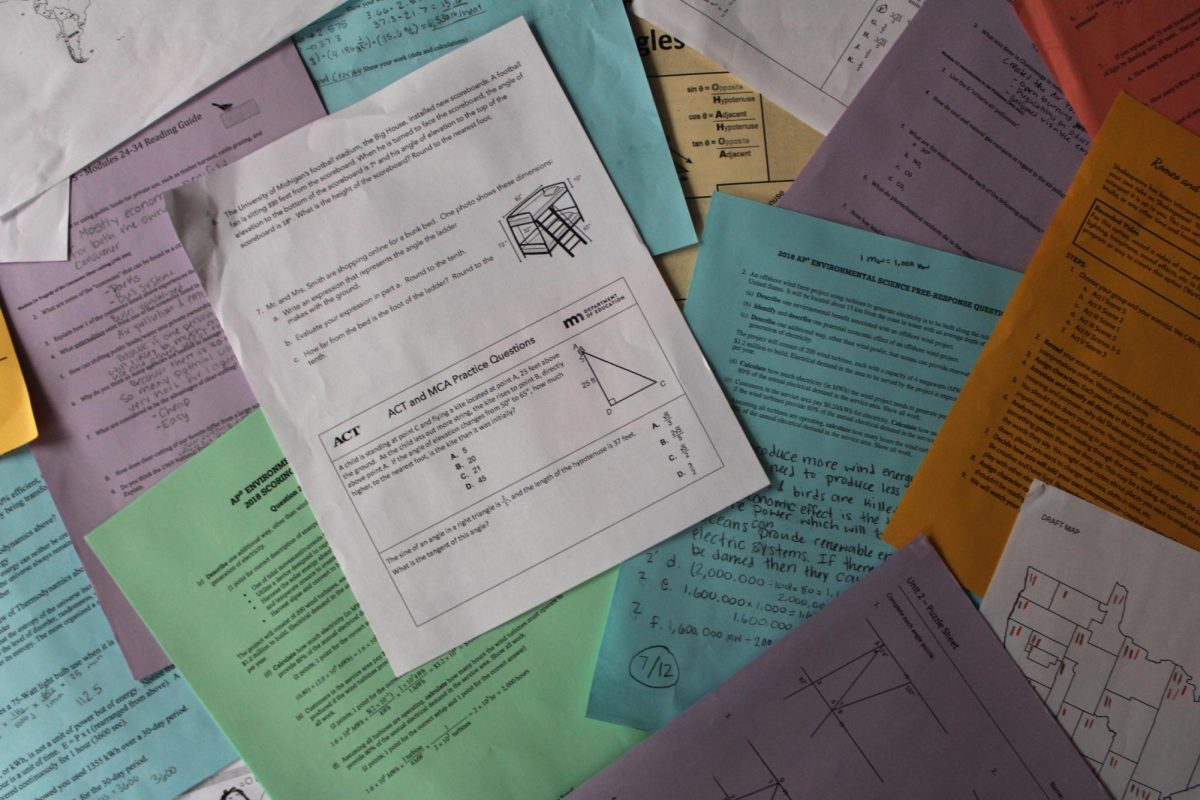
The traditional high school structure is fundamentally built around measuring students’ intelligence, more specifically, their book smarts. Scoring highly on a multiple-choice quiz, standardized testing and understanding the content of a specific subject well enough to represent it in your own words are common ways to measure one’s intelligence in the context of school.
Park math student teacher Zak Klaiman said that while most of the time in math there is only one correct response, the process is more important than the answer you may end up with. He said understanding the journey and the reasons behind your math work will ultimately improve your outcomes.
“There are times where one plus one definitely just has one right answer, but the way you get to the answer is more interesting than what you write down,” Klaiman said. “When you try to understand the thought process more, your results will be better. The way we grade tests and homework is really focused on the explanation more than just the answer; the way you get to the answer is more interesting than what you write down.”
Senior Ben Hicks said school is a priority for him because he feels motivated by the structure and his ability to achieve excellence. He said problems with one set answer feel more tangible and straightforward to solve.
“School is important to me because it (feels like) achievement-based learning, (which is) an easy motivator for me,” Hicks said. “(In order to) get good grades, I feel like I don’t (typically) have to try that hard, (I prefer when there is) one concrete answer because that’s easier to solve and makes more sense for me.”
Freshman Iqra Mohammed said working hard and excelling in school is a crucial foundation for what she hopes to achieve in the future. She said she hopes to pursue careers that require many years of education, and she plans to complete the IB Diploma (International Baccalaureate) to gain new skills and further immerse herself in her studies.
“I need school to achieve my goals and dreams, such as going to a good school and then later having a good career,” Mohammed said. ”I have plans to get an IB diploma because the IB Diploma certificate can help get you into a lot of the schools, and I also just think that it can help me achieve a lot of different skills that I need.”
Assistant Director of University of Minnesota recruitment, Nick Hervatain, said there are many different aspects the University looks at when reviewing applications. He said academics are a lot of what’s taken into account, such as classes, grades and test scores.
“Speaking for Minnesota, we practice a holistic review, so there’s not necessarily one factor that determines whether or not a student is going to be admitted,” Hervatin said. “We’re definitely looking at academic factors. We’ll look at the GPA, but also how rigorous the courses that a student is taking are. (We look at) if they are AP, ID or dual enrollment (courses). We also will look at test scores. I know right now, we’ve been testing optional, but if a student decides to submit something like that, that can be another thing that we will look at.”
According to Klaiman, provided that you work hard and put in an effort, everyone can excel at math. He said sometimes external forces can distract students from focusing on the curriculum, but if you put forth effort and attempt to problem solve, you can achieve success in math.
“Everyone’s a mathematician. As long as you’re willing to try and work through struggles, you can be good at math,” Klaiman said. “Those that are willing to try, sometimes it’s hard to just sit down and work through a problem (for example, maybe) you didn’t sleep well last night, so you just don’t care, but anyone who’s willing to try can do well at math.”
Hicks said performing well in his classes is important to him, alongside other areas of his life, like his relationships. He said post-high school education is a motivator for his academic success, as well as the positive feeling of doing well in school.
“Getting good grades is definitely something that I like to do, but also maintaining friendships is a large priority (of mine),” Hicks said. “Getting into a good college (motivates me and) I tend to be a competitive guy, and doing well (in school) is just fun.”
Mohammed said she performs well in many different environments, especially those where she can use her logic skills. She said working hard in school is so important because of the future she desires and her personal interests.
“I excel in a lot of different things, more specifically in logical things that include debating or figuring out different things,” Mohammed said. “(In order) to achieve my future goals and dreams, such as becoming a doctor, I need school.”
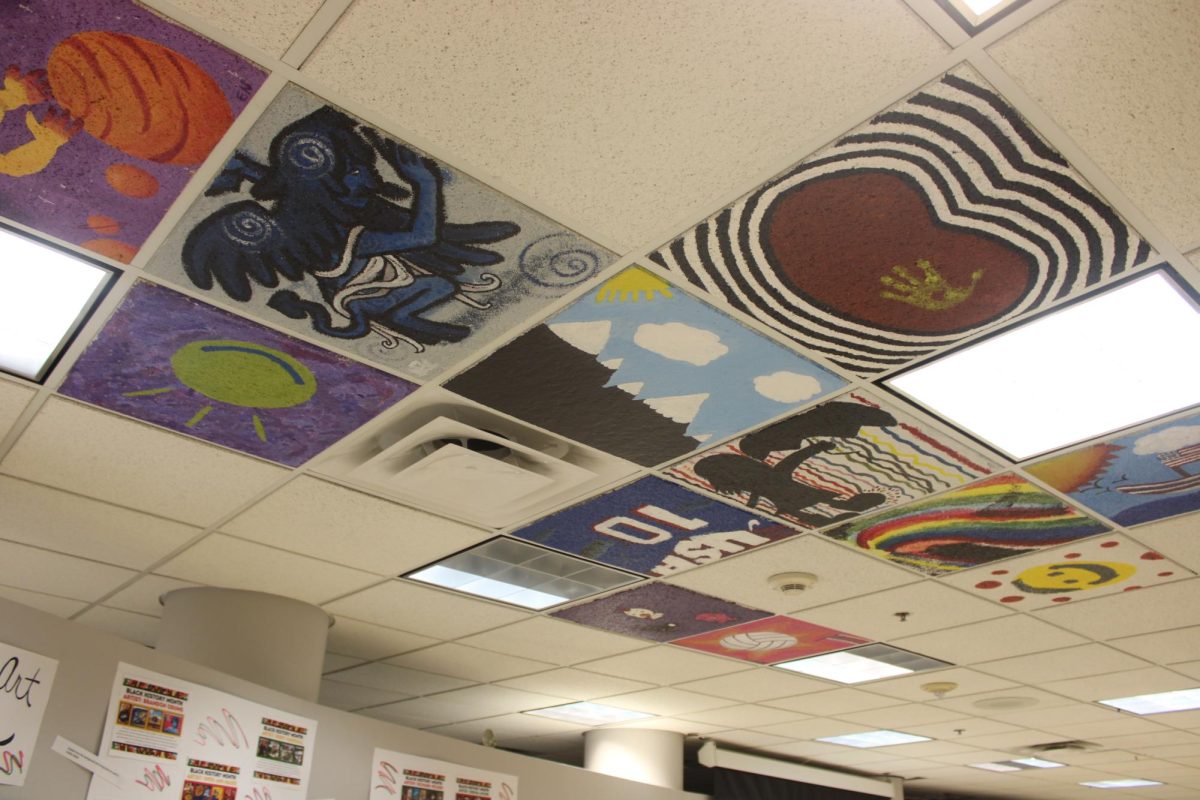
Where some students excel more with a structured outline of learning, others feel more confident in their abilities to create freely and apply their knowledge in a different way. Not just in a school context, but also as a general understanding of the world. Art, which the Oxford Language Dictionary defines as the expression or application of human creative skill and imagination, shows up in all of us. Excellence cannot always be measured, but in a world where our performance is often judged by a number or a grade, it’s important to acknowledge artistic intelligence and hold it to the same standard as academic excellence, not something less than.
Senior Lucio Mendez Duffy said intelligence is universally undefiable, and everyone’s individual intelligence is a combination of many things. He said everyone has unique knowledge and their own way of applying it to the world.
“There’s not one definition (of intelligence),” Mendez Duffy said. “Everyone has their own intelligence. It’s kind of a mix of what you know, what you want to know, and how you learn things.”
Art teacher Molly Timmernam said art directly corresponds with intelligence and offers an endless spectrum of interpretations and divergent ways of solving issues. She said being creative and having an understanding of art is important for interpreting the world around us, and everyone should have at least a basic understanding of art.
“Art is very much intertwined with intelligence,” Timmerman said. “There is no clear answer to any visual problem, and there are so many different ways to solve it, and the way that you come about an answer or a solution can be so many different things, and that’s one way it really challenges intelligence and helps people grow. Everybody should be able to know how to identify art, read about art and talk about art. It improves your overall intelligence and makes you a more educated person.”
According to senior Aurora Pascual, art is not just an elective; it’s a form of expression and an interpretation of the world. Pascual said they enjoy a variety of art forms, including visual art, audio art and performing arts.
“I love art because it is a vehicle for connection between people,” Pascual said. “I do visual arts, but I also love listening to music and watching performing arts, and it provides a different way of viewing the world and seeing other perspectives that you can’t really get from (other things), and (it provides) a unique perspective on things.”
Timmerman said artistic intelligence is the ability to view the world in your own unique interpretation, especially through a visual lens. She said exploring how we each view our surroundings can help improve our perception in life and in different environments.
“When I think about artistic intelligence, I think about seeing the world in different ways than other people, and how we are just inundated with visual language, and having the ability to make (the world) more beautiful is better for everybody,” Timmerman said.
According to Mendez Duffy, art appears everywhere and is part of everyone’s lives. He said art is perceived differently by everyone who sees it, and how one views a specific piece of artwork is in the eye of the beholder.
“Art is in everyone’s lives, it’s everywhere— I don’t think you could say you’re good at art, it’s all personal perception,” Mendez Duffy said. “I mean, you can look at something, and it’s art to one person. (But) it could be not to another person, but I like looking at everything being art. So then, if it’s around me all the time, then it’s incredibly important to me.”
Hervatin said he sees potential students’ artistic intelligence in the extracurriculars and classes they take, such as music classes. He said this shows their intelligence in their ability to manage their time with school and artistic endeavors.
“When it comes to artistic intelligence, I might see students in applications who are getting really involved in their schools, band, orchestra or choir program, and maybe they’re going (to go) off to all states, or get involved in some more competitive stuff that way,” Hervatin said. “They have that practical intelligence of being able to navigate that time commitment and balancing all of those different things that are going on.”
Pascual said they wish art classes worked in the same way as core classes by having multiple different levels and a larger variety of media available. They said offering more art electives would benefit students who are interested in specific media, whether pursuing art as a future career or as a learning opportunity.
“(I wish) our school had more levels of (art) like we have a lot of levels of Math, English and Science, but there’s just intro to art, and then a couple more classes you can take at the high school,” Pascual said. “I (also) wish we had more, advanced or focused classes in the arts, like for example, a jewelry or printmaking (class), that allow you to really hone in on one thing and learn the more advanced principles of it.”
According to Timmerman, she meets so many intelligent students in her classroom who demonstrate knowledge in their own unique ways, some more traditional and some more abstract. She said it would be beneficial for schools to allow students more room to seek a variety of answers rather than just right or wrong.
“Students are so smart, and they bring so many different things to the classroom, and all sorts of different types of intelligences, you’ve got problem solvers, creators, you’ve got linear thinkers and mathematicians,” Timmerman said. “I do think that it would be better if schools were allowed to be structured in a way that allowed for more open-ended problem solving.”
Pascual said they have a stronger natural desire to express themselves through art and to use it to decompress than with other activities. They said excelling in art motivates them to pursue it, and their creativity can also help them in other areas and school subjects.
“Sometimes there’s more of a pull to sit down and do artwork after school, just as a chill time (rather) than doing homework or playing sports or other things,” Pascual said. “Being able to be creative is something that I’m good at, which can lend itself well to other subjects, but it definitely goes hand in hand with art.”
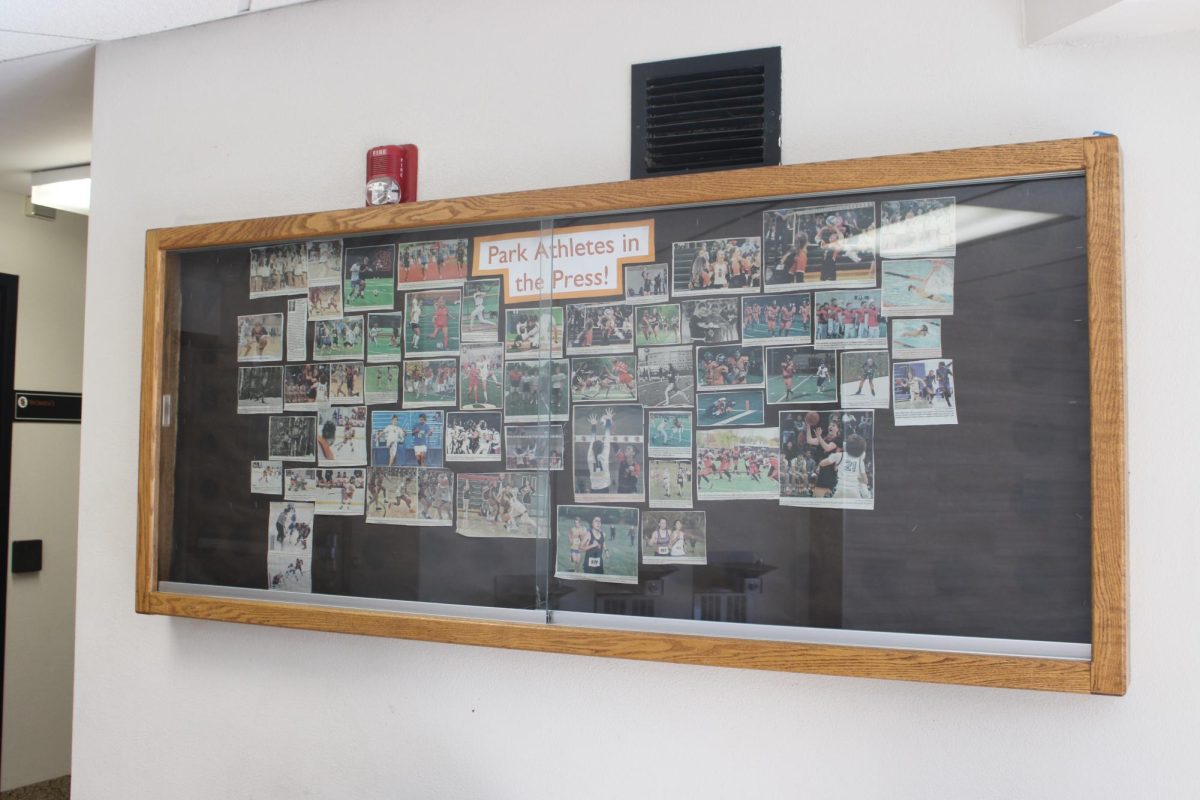
Physical education and health teacher Kayla Ross said the famous stereotype that depicts an athlete or a “jock” as less intelligent is false because it takes a large skill set and complex understanding of a sport in order to excel at it. She said book smarts and sport smarts are not mutually exclusive, and although sometimes being a student athlete can get in the way of school, that it’s not that way for every athlete, and there’s a way to find a balance.
“People are using that as a notion of like a jock, essentially that they’re not very smart just because they perform well in something like football,” Ross said. “Anybody who’s played football (knows) it takes a pretty high level of IQ to understand the game and to be able to function at a high level, play at a high level. Sometimes academics do get put on the back burner to sacrifice time for athletics, but that’s not the case for everyone.”
Senior Logan O’Dea said athletes often get overlooked academically, and he likes to achieve more success in the classroom than on the playing field. He said there is a stereotype that people who are good at sports are less intelligent than others, but he believes the opposite, saying that oftentimes if you are an athlete, you are likely to be smart as well.
“I would say a lot of times people who are good at sports get overlooked,” O’Dea said. “Oftentimes, people mistake being good at a certain sport, for example football, as they are not very smart in a classroom. I (don’t think) that’s true at all. Recently, I found a statistic that our basketball team has a 3.6 team GPA, which is really high. And for some people, being an athlete (also) means that you’re a smart kid. For me, being an athlete and being good at a sport means that you’re also better in school. I like to be better in school than I am at my sport because that’s what makes me who I am.”
Freshman Wyatt Schmale said he feels most confident in his athletic abilities as a way to demonstrate excellence, but he doesn’t believe his athletic intelligence is more important than book smarts. He said his love for sports is something that he hasn’t been able to find in other areas, such as the arts.
“I definitely excel in sports more (than other activities)—and (although sports intelligence) is important, I don’t believe it’s more important than intellectual intelligence,” Schmale said. “(Sports were) the first thing that I fell in love with. I haven’t really found love (for) art and music as I have for sports.”
Freshman Gabbie Loberg said focusing on her academics is important so she can further her education and softball career post-high school. She said academics are always her top priority and are necessary for future opportunities.
“(School is a priority for me) because I have a lot of goals set for myself and to go to a good college for softball,” Loberg said. “Academics have always come first for me. If you don’t consider your academics and (only) try to excel in your athletics, it might not go well because if you want to go somewhere with athletics, you have to have good academics to get there.”
O’Dea said intelligence is shown in how we all understand the world and take in different subjects. He said everyone comprehends things on different levels and at different speeds and how we are able to learn and interpret different topics demonstrates our knowledge.
“Intelligence is how you can understand and comprehend different topics,” O’Dea said. “I would say it’s the level that you can learn, and how fast and how much you can comprehend.”
According to Ross, each individual has their own unique knowledge of each subject and is able to express excellence in different ways, with one of her personal ways of demonstrating intelligence being through playing sports.
“Everyone has different styles of learning and ways of displaying their knowledge, and it takes a large amount of IQ to play different sports, and different positions in those sports, and some of us are better at other things than pen to paper or mathematical brains versus the more kinesthetic learner,” Ross said. “Sports (have always been) where I can display my knowledge, that’s not with a pen and paper.”
According to Loberg, excelling in sports offers many advantages and opens a lot of doors for student athletes. She said she’s always been an athletic person, even from a young age, and sports intelligence runs in her family.
“If you do (well in) sports and you succeed, it can open a lot of opportunities for you in your life and where you decide to go to college,” Loberg said. “I’ve done a variety of sports my whole life, and my parents were both college athletes, so I feel like I grew up in a very athletic environment and I’ve (always) done well in sports.”
Hervatin said academics are a majority of what’s looked at in applications, even if it does not fully align with the student’s desired major, in order to be sure that the student is on a path of success at the university. He said regardless of a student’s specific skill set, they must reach certain academic requirements, although the degree to which the university will measure grades and test scores in specific classes is dependent on the student’s intended major.
“With admissions for the university, academic information is going to be the foundation of that review because we do want to make sure that students aren’t coming to campus and then running into big problems where they’re not able to succeed academically,” Hervatin said. “That said, we don’t look at an application through any specific, single lens. Some students are in activities, whether it’s sports, art or community involvement, and those experiences can really tell us about who a student is beyond just their academic record. Our goal is really more so to consider all parts of the application; for example, there might be a student who is recruited to play on the university’s football team, but that student still needs to meet those academic standards of admission to come to the university. We love having students that are really eager to play sports, and at the end of the day, want to make sure (everyone is learning).”
Ross said student athletes have a lot to manage, between practices, games and academics, and that it is valuable to acknowledge the work that they put into their sports and their academics.
“Both (athletes and people who do well in school) should be celebrated,” Ross said. “Student athletes have a lot on their plate, because you, on average, are focusing on academics as well as having the extra layer of wanting to perform well, and the hours that go into sports that take away from the time that you have for academics, and you have to find other ways to get your academics in and succeed. There’s a lot of pressure for student athletes, and it’s important to recognize them.”
Unlike a test percentage, a piece of art or a sports score, emotional connection is an intangible phenomenon that cannot be defined. While undefinable, emotional intelligence is just as important as other forms of intelligence. As humans, we communicate with the people around us every day and form relationships with each other, so knowing how to interact with our peers is crucial. Traits like empathy, self-awareness and motivation can help us connect more deeply to each other and communicate more effectively.
According to social studies teacher Julia Germain, there are many theories surrounding the idea of intelligence and the idea that there are infinite ways to be smart. She said there are many different ways people display their intelligence, and some people excel more in certain areas.
“In psychology, there are a lot of theorists that study intelligence, and there’s a theory that we all have multiple forms of intelligence, and not just intelligence in one form,” Germain said. “There’s a belief that some people are really good with sports and are really athletic and kinesthetic, and some people are really good with things like arithmetic and math. (Also) some people can be really intelligent in navigating their own emotions and understanding other people’s as well.”
According to Hervatin, he sees potential students’ emotional intelligence in how they can show their ability to read emotions, their own and others, in their essays. He said emotional intelligence shows up in applications when students are able to put themselves in others’ situations and empathise with them. He said seeing students’ leadership in high school is also a sign of good teamwork and their growth through high school.
“What I see in applications is students’ ability to articulate, maybe through an essay, how they understand and manage their own emotions, or their ability to be responsive towards others in their life,” Hervatin said. “A lot of times, I’ll notice it in essays, when students can take a perspective of empathy. Maybe something happened to somebody that they know, and they’re able to put themselves in their shoes, or just their ability to communicate thoughtfully and dig deeper into that emotional side of what they’re writing about, rather than it being super analytical. I can also see emotional intelligence appear for students who are getting involved in lots of things that require them to collaborate with other students, or their ability to show self-awareness as they’ve grown throughout high school, and taking on leadership roles.”
Junior June Davis described intelligence as a range of things without one single interpretation. Davis said everyone is good at something and smart in different ways, so intelligence is almost incomparable.
“(Intelligence) is definitely a variety of things, like emotional intelligence and just school intelligence, book smarts and then just social intelligence,” Davis said. “I don’t think there’s really any (one definition), nobody’s really dumb and everybody is good at something or smart at a variety of things.”
Sophomore Isaac Carlson said having an understanding of emotional connection is crucial in the real world for situations where you have to work with people with whom you may not get along. He said being able to build connections with the people and world around us makes everything a lot more manageable.
“I do (wish schools focused on emotional intelligence) because in the real world, if you’re able to build connections easier (when) you work with other people that you might not want to work with, you have more understanding,” Carlson said. “Also, if you’re able to build connections with people, you’re able to work better with people. Overall, I feel like life would be a lot easier if you’re just good at building connections.”
Germain said all types of intelligence are important, but emotional intelligence is often forgotten, even though it’s crucial for everyday life. She said we use emotional intelligence to communicate and have relationships with others, and we need to be able to communicate effectively in order to thrive as a society.
“I don’t think one (intelligence) is more important than the other, but I do feel like (emotional intelligence is) definitely overlooked and not valued in the same way that other intelligences are,” Germain said. “It actually works in favor of people who are really emotionally intelligent because most workplaces involve people, and so knowing how to work with people well and navigate those social systems is equally as important and also essential for all the other forms of intelligence.”
According to Davis, emotional intelligence is valuable as it helps you empathize with others and appreciate their point of view. Davis said it can help defuse arguments if you just take a step back and try to understand their side.
“(Emotional intelligence) is important because it helps you better understand someone even if you’re in an argument with someone and you completely disagree with them. If you can understand where they’re coming from and what they’re feeling, that can really help you come up with a solution or just become friends,” Davis said. “If I see one of my friends crying, I will start crying just because that’s just how I feel. I’m just really emotional, and I feel for people because I (try to) put myself in their shoes.”
According to Carlson, intelligence is the understanding of one’s personal goals and the effort that they put into specific skills. He said you can better understand yourself as an individual when you are emotionally connected with others.
“Intelligence is someone who knows their goals in life, knows what they want to do, and puts in effort for that (specific type of intelligence) and tries new things, and if you consume knowledge by trying those new things,” Carlson said. “I feel like being emotionally intelligent shows who you are as a person, and you get to know what type of person you want to be.”
Germain said her students allow her to view many different forms and combinations of intelligence through how they participate in her class. She said each student has different ways of taking in knowledge and then demonstrating it, and that we should celebrate all different types of interpretations and not hold one above another.
“I see (intelligence) in how kids show their knowledge in class. I see some kids who really excel with written assignments, some kids who really excel verbally in discussions, and I see kids who really excel with more creative projects. As a teacher, I try to make sure that kids can show their learning in a lot of different ways to meet their needs,” Germain said. “It’s the job of schools to support kids and highlight their brilliance in all the different ways, and it’s important to highlight all (intelligences) to build up kids’ confidence. If they’re maybe not good at one specific thing, they can actually be really smart and brilliant in a lot of different ways.”
Hervatin said society often paints certain career paths and types of intelligence as “more important” than others, and that shouldn’t be the case because every type of intelligence is needed and important. He said you should not let aspects like society’s perception and salaries deter people from pursuing a career in which they feel passionate about.
“In the US, (I think) society definitely places a higher value on fields of like engineering, business and technology, and I want to emphasize that it doesn’t mean the intelligence required for other fields, whether it’s art, social sciences or humanities is any less meaningful,” Hervatin said. If (there is) something that you’re passionate about, don’t let the prospective salaries dictate where you go because those fields are equally as important. Take the opportunity to pursue what you want and don’t feel like you have to fit (into) a certain mold of intelligence because there are all different types of it and you’ll find the field that (best) aligns with your intelligence.”