
Skip to Content

Dealing with gambling

A look into the increase and effect of gambling at Park
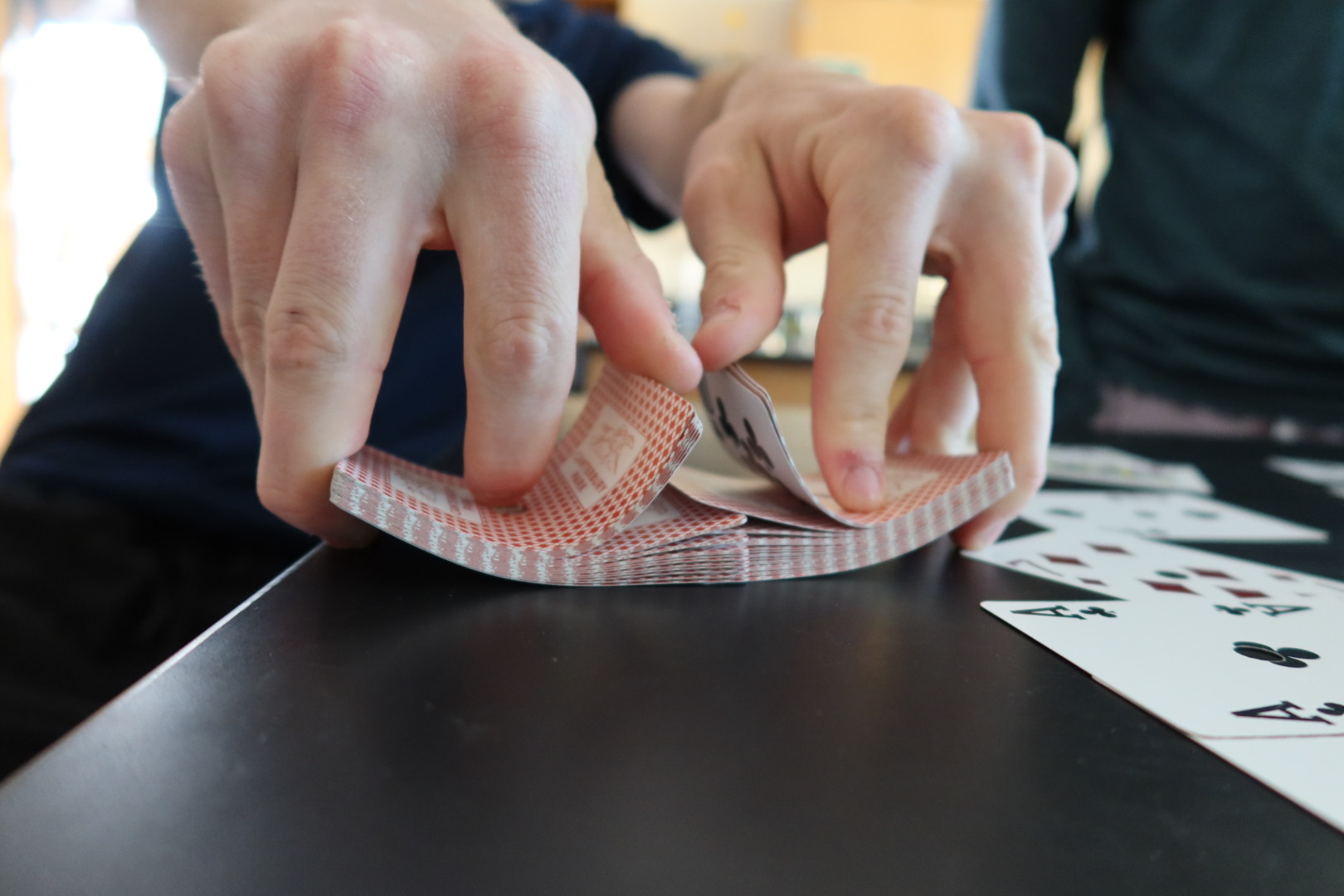
A student shuffles a deck of cards on a science classroom table on May 6. Students' gambling at the Park has been on the rise, sparking a crackdown on the rules in school.
A student shuffles a deck of cards on a science classroom table on May 6. Students’ gambling at the Park has been on the rise, sparking a crackdown on the rules in school. (Emma Egan)
Rise of gambling at Park

Gambling, which includes online betting, prediction markets, sports betting and card games, has become increasingly prevalent across the country, and now in schools. Over the past two years, there has been an increase in gambling at Park. Now, teachers at Park are worried that students don’t understand the risks and consequences of gambling, while some students assure that they are responsible. Both students and teachers have several different opinions on how gambling at Park should be dealt with in the future.

According to Assistant Principal Alonzo Parks, there has been a recent uptick in students talking about gambling and actual gambling on school grounds, even if the school had already issued previous warnings.

“We’re hearing a lot more in conversation in the hallways when it comes to sports betting, like the students talking about the apps they use to sports bet, the best place over the weekend and things like that,” Parks said. “We’re also seeing physical evidence of it, students in the hallway with dice in their hands and things like that, after several warnings.”

History teacher Charles Mahaffey said he doesn’t see students gambling in his class, but over the past two years, he has increasingly heard students talking about gambling.

“I don’t see students betting directly in my classes, but I hear students talk about it all the time, so I imagine they are gambling a lot more,” Mahaffey said. “(I have heard it) especially over the last two years.”

Senior Coralee Arnold said a lot of students talk about sports betting because they believe it’s an easier form of betting, even if it sometimes is not.

“Many kids really talk about hitting parlays on sports bets because it’s easier and believe the odds of the game will always play out in their favor, but that’s not always true,” Arnold said.

History teacher Evelyn Bird said illegal underage gambling has increased because of how sports games are constantly promoting sports betting apps and pushing them to their viewers.

“Underage gambling has become more common in large part due to the fact that most major sports leagues and entertainment corporations that promote and show sporting events have made gambling and betting a core part of the experience,” Bird said. “Games or segments of games will be sponsored by betting websites. If you watch a baseball game, Apple TV will oftentimes show the over-under on the potential pitch from being thrown, the chances of a hit and what kind of hit. The fact that not only are they advertising it in such a way, just simply saying, ‘Hey, this is sponsored by like FanDuel,’ but also within the game, providing opportunities for young people to see how they can gamble.”

According to Matt Missar, a clinician at The Better Institute who specializes in gambling-related concerns, gambling has increased amongst teens because teens have easy access to legitimate or new illegal gambling sites.

“It’s so accessible to finding ways onto legitimate apps,” Missar said. “Obviously, teenagers are very resourceful, so if they want to do something, they’ll usually find a way to do it. With gambling and the way it’s progressing, it’s just so easy to find access, whether it’s through legitimate sites or if it’s finding offshore and illegal websites to gamble on.”

English teacher Kara Marlin said the increase in gambling is an issue that the school hasn’t been prepared for. They also said this increase in gambling is due to how easy it is to sign up for online betting apps.

“The school has not been really equipped because this is a new phenomenon,” Marlin said. “Online gambling, both with sports betting and prediction markets, these apps are popping up, and it’s easy to get past age verification, so access is greater than ever. Whereas, previously, you had to go to a casino to gamble, and there’s somebody IDing you at the door.”
Gambling’s effect on students

According to Bird, students don’t see the very real risk of gambling and how it can lead to addiction. She said people don’t understand how similar a gambling addiction is to other harmful addictions like drugs.

“Students don’t understand (the risk),” Bird said. “We call it a gambling addiction for a reason, like the chemical rush that you get from having your bet go well is an addictive feeling. It’s the exact same kind of addictive rush that you get from taking drugs or from doing other kinds of harmful behaviors. For a lot of people, they’ve been conditioned to believe that betting is not similar, because it doesn’t involve anything physical, and it’s just money, a nebulous idea, when chemically it’s nearly identical to harmful behaviors.”

Senior Ilan Schein said people have an untrue picture of how someone who gambles acts. He said sometimes gamblers are reliable and aware of the risks of gambling.

“When someone thinks of gambling, they think of someone who is addicted and is just throwing their money away. That’s just not very true. I believe lots of gamblers are responsible with what they’re doing, and they know the potential risks they are taking,” Schein said.

According to Missar, some teens understand the risks of gambling, but the majority don’t understand the financial risk or how their brains interact with gambling.

“Some (teens) do, overall, there is a lack of understanding of the risks that gambling can lead to, specifically the financial risk,” Missar said. “But also, there’s a lack of understanding of how gambling impacts the brain at that age, and how sensitive the adolescent brain is to high-reward sensation-seeking behaviors. And so gambling is a really obviously sensation-seeking activity, and so it really preys on young people’s brains. So, there’s a little bit of a lack of understanding of that for young people in recognizing how gambling really impacts their brain and their behavior.”

According to Mahaffey, he does not see how gambling affects his students in class, but he does see how it personally affects them and their families.

“I don’t see (gambling) impacting their success in class, but I have had interactions with students who are getting in trouble with their parents or are spending money they’re not supposed to,” Mahaffey said.

Parks said that due to their age, students make a lot of decisions based on impulses and may be unaware of long-term effects. He also said peer pressure is a main way gambling spreads and affects other students.

“We’re making impulse decisions at this age, a lot of the time,” Parks said. “So we’re not making informed decisions usually, and we’re not really thinking about the long-term impact of being involved in sports betting. You know, it’s a lot of short-term instant gratification. The more of their friends that are doing it, they start feeding into each other, and they kind of spread.”

Senior Ami Davis said he feels a bit of pressure from other students to gamble, but the pressure is mostly from students who want more tokens to gamble on the online betting websites.

“The only pressure is that people want to redeem tokens on the different websites, and so they try to get their friends to do it so that they can get more points,” Davis said.

Missar said gambling has become normalized, even more so as a social activity to do with friends, because of how intertwined it now is with sports. He also said there can be an aspect of peer pressure to gamble because people want to fit in.

“There’s a huge social component to gambling now, especially when we’re talking sports betting,” Missar said. “It’s just become so normalized, but just ingrained in sports, and so a lot of teenagers find it to be a way to connect with friends and a social activity to do with friends. But there is also the peer pressure of not wanting to be the odd one out by not gambling, so there might be some peer pressure that leads someone who may not initially want to gamble to eventually gamble just to fit in.”

According to Marlin, they saw a peak in gambling a couple of years ago, but it has died down because they got stricter with phones being out. They also said when students’ gambling was an issue, it negatively affected them and consumed a lot of aspects of their lives.

“I noticed a peak in it in my room a couple of years ago,” Marlin said. “It may be that because I have gotten stricter on phones recently, I just see it less because phones are out less. But when I did see that happening, I definitely noticed that it was a huge distraction from school, generally, and even their social life. It seemed to take over a lot of the things in their life, and just eclipse everything else. And kids’ mental state seemed to depend on how well they were doing with that, as opposed to sports, friends and all those other things.”

Missar said he would recommend teens who think they might be struggling with a gambling addiction to really evaluate themselves. He said there are many key warning signs that students should be wary of.

“I would encourage them just to do a self-assessment,” Missar said. “Just recognize the warning signs when gambling becomes a problem. Some of those warning signs you might pick up on are a loss of interest in other activities, you might see a decline in your grades, or you might not be going to school as often if you notice. (Another example is) chasing losses, so if I lose a bet, I’m quick to bet again to try to win back that money. That’s a very big sign that gambling becomes a problematic behavior.”

The future of gambling at Park

According to Davis, gambling is nontoxic. He also said some teachers overreact to students who are just playing card games with no money.

“A lot of times it’s harmless,” Davis said. “If we’re just playing with cards and no money, then there’s nothing that needs to be done, but some teachers overreact a little bit.”

Schein said teachers are dealing with the issue of underage students gambling well. He also said teachers should not be so surprised that students who can legally gamble are actually doing it.

“Teachers are handling underage gambling correctly, but with people who can legally gamble, they need to stop acting as if it shouldn’t happen at all,” Schein said.

According to Arnold, a lot of students who legally gamble misuse it, but there are ways people can be smart about gambling. She also said that when people make poor decisions about gambling, it should not be something the school tries to control.

“I definitely think you can be smart when gambling,” Arnold said. “I really just believe lots of people misuse it for something it shouldn’t be, but that’s the person’s decision, not something that should be controlled by the school.”

Senior Brian Torres Rocha said the school is not doing a good job of informing students about the rules and the subsequent consequences of gambling. He also said teachers should give students more encouragement not to gamble.

“I feel like teachers are not handling it well, because they’re not like telling (the students) what the rules and stuff are, or like consequences that can happen to them,” Torres Rocha said. “So they should give them some inspiration not to do that stuff.”

Parks said the school could increase the specifics of the longer-lasting effects and the consequences of gambling at school in the student handbook. He also said the goal is to keep families and students informed.

“There are some changes we could add to our handbook if it continues to be an issue, and being more specific around maybe some of the consequences and long-term impacts of it,” Parks said. “Again, just informing our students and our families that (gambling) may be an issue, and here’s how we’re going to address it at the school.”

According to Mahaffey, a simple fix to the gambling issue in Park would be to fully ban the use of phones. He also said if a future issue arises where a student puts a lot of money on a sports bet in school and loses that bet, who would be held liable could be a major problem for the school.

“A one size fits all solution for this is just to ban phones in schools completely,” Mahaffey said. “If we were ever to face an instance where a child at our school placed a very large bet while they were at school and they lost a significant amount of money, we could be liable to the family. There’s an argument there that we would share some of the responsibility for that, and that’s gonna happen eventually. Some kid is gonna get access to his mother’s debit card, and he’s gonna put $1,000 on Steph Curry to score 24 points in the first half. That’s not gonna happen, and we as a school would share some responsibility for that.”

Marlin said that when teachers try to help students with addiction, they might not often think of students with gambling addictions. They also said it would be good for the school to find new ways to help students overcome their addictions.

“(Gambling is) not the first thing we teachers or counselors think of when we think of a student dealing with addiction; our mind at first tends to go towards alcohol or drugs,” Marlin said. “It’d be really good if schools started really exploring how we can be supporting students in moving past this and addressing their addiction.”

Assistant Principal Evelyn Lashley said the personal financial management class, which everyone is required to take for graduation as of next year, could be a great spot to inform students about the effect of gambling on someone’s finances.

“I also see a connection to the new grad requirement of personal financial management,” Lashley said. “That’s now a grad requirement for all students that will be starting for next year, that everyone’s enrolling in that, and so that’s maybe room to talk with our business department around how gambling could be part of the conversation around personal finance.”

Parks said that gambling was previously a very off limits topic in schools, but has very recently become more acceptable. He also said classes, like personal financial management, would be a good way to have a real talk with students about gambling.

“A lot of the conversation around gambling used to be pretty taboo, and people wouldn’t really talk about it,” Parks said. “But now we’re in a space where we can talk about it, and maybe one of those classes would be a great space to have that discussion.”

According to Missar, gambling in schools should be banned, but he also said it would be incredibly hard to fully ban it. Instead, he said that schools should focus on educating their students about the potential risks of gambling.

“I do (think it should be banned),” Missar said. “I just think it’d be a very hard thing to do. So, instead of focusing on that, what I would encourage is for more education on the risk of gambling in schools, because I don’t think you’ll ever be able to ban it from schools, just like you’ll never be able to, you know, ban drugs or vaping. It’s just very difficult to do so. Instead, it’s important for teachers or just educators to educate their students on the risks and harm and all of that when it comes to gambling.”

Lashley said there are three tiers of intervention that the education system tries to follow. She also said that to decrease the chances of students developing their addictions, the school should make sure to get more information and intervention opportunities to everyone, not just those who really need it.

“In education, we talked about the three tiers of intervention: tier one, tier two, tier three,” Lashley said. “Tier one is what everybody gets. Tier two is a small percentage of students, like 20%, and then like 5% get tier three. And so if it’s individual conversations with students and families that we see doing it a lot, that’s more tier three. That’s like a few kids, and then, like the handbook or personal finance would be things that are tier one, where it’s to everybody, and then, like a reminder, in park connections could be tier two. So that’s why, just thinking about the ways, the more that we can make things built in at tier one, the less likely it is that people will rise up to the other tiers.”

According to Parks, gambling is illegal on school grounds, and students will face consequences for doing it. He also said that gambling at Park has not yet become a large issue, but he wants to help fix it before it grows out of control.

“Gambling on school grounds is illegal, and there are consequences for that,” Parks said. “So we’ve sent out several emails, and we’ve talked to students individually and reminded them that we can’t control what they do off school grounds, but we try to control what they do here, and just kind of get it under wraps. I don’t think it’s a huge issue yet, but we want to get ahead of it before it becomes one.”

More to Discover