

Skip to Content

Missing pieces

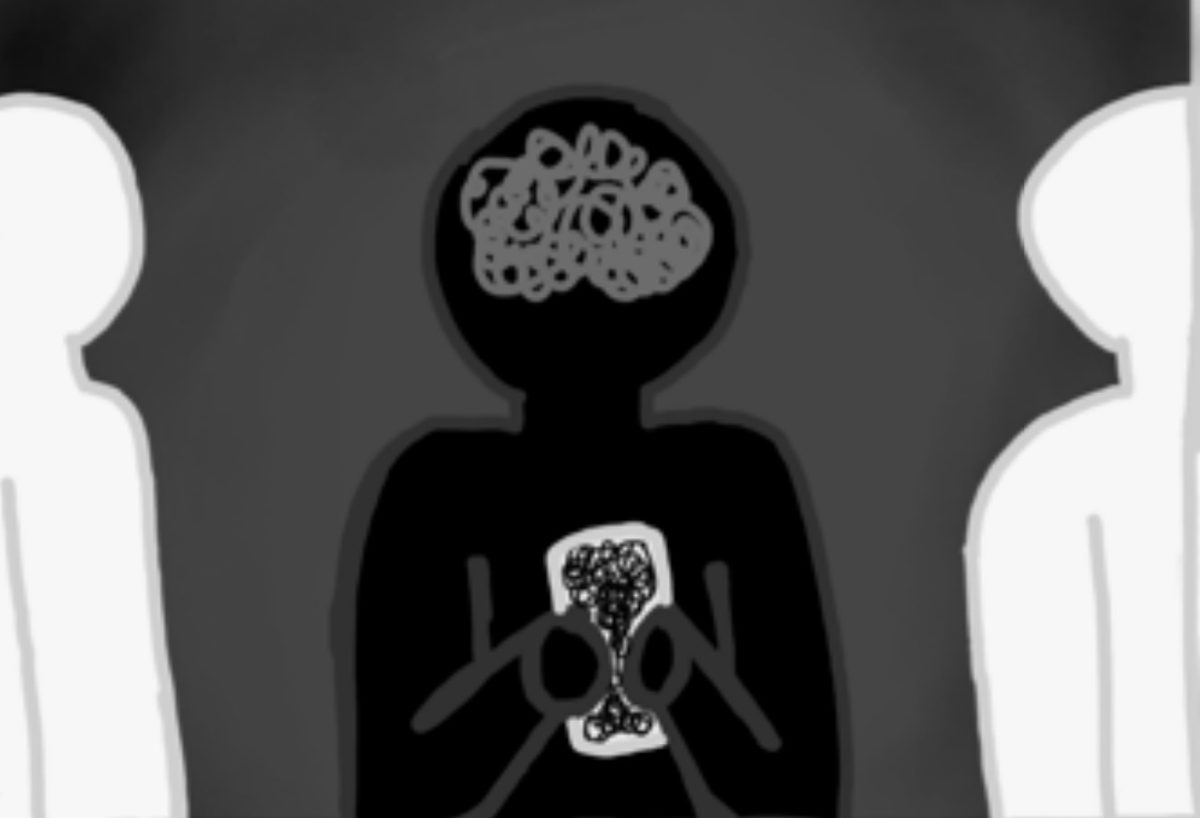
A deep dive into isolation and loneliness at Park
Illustration by Dalia Ackerman (Dalia Ackerman)
Park seclusion

Students across the country are experiencing the same phenomenon, which some professionals are calling “the loneliness epidemic.” Students are excluding themselves either intentionally, as a defense mechanism, or under the influence of other factors, including social media. This isolation in students’ lives can wreak havoc on their social lives and affect their future jobs and lives after high school. Many teachers, students and mental health professionals have different opinions on isolation at Park.

According to English teacher Ryan Dear, there is a clear difference between a student who is naturally introverted and one who is experiencing social exclusion. Dear said teachers often look at a student’s engagement in class to tell the difference, saying that introverted students often appear content in their environment, while excluded students may show a desire for interaction.

“When (there is) a student who’s naturally introverted, their demeanor is clearly one of contentment when they’re on their own, and that’s usually pretty clear; they’re happy to be drawing or reading a book,” Dear said. “Versus someone who is socially excluded, you can see that they’re longing for interaction with others in the ways that they watch others and the ways that they might try to be involved in conversations, but aren’t necessarily welcomed into those.”

Senior Luke Eenigenburg said it might be difficult for new people at Park to fit into the already established groups. He said it can be more challenging for someone to find their way when people have already become well established in their own groups.

“(Finding a group to fit into is) probably gonna be hard if you’re new,” Eenigenburg said. “Friend groups are already made, and you have to work your way into it instead of being part of it when it starts, so it’s always harder to go into something halfway through.”

English teacher Kara Marlin said a major “red flag” of isolation is when a student remains on their phone instead of engaging in a group. They said the key to helping these students is breaking a certain relationship status to understand who they are as individuals.

“A key kind of giveaway that puts up the red flags in my head is when I can see a student sitting with a group who are all talking and conversing, but that student is not; they’re sitting on their phone,” Marlin said. “Ultimately, I think teachers have to know students well to figure out what they need and what they might be going through, so you can understand who they are as a person and what they like to do.”

According to junior Emanual Vela, he has his own social circle that feels natural to him; however, he said he also feels comfortable with many people outside his main group of friends. He said he thought people mostly stick to their established group. 

“I have a main group of close friends that I spend most of my time with, and those are the people I feel most comfortable around,” Vela said. “At the same time, I also talk to a lot of other people at school, even if I don’t hang out with them outside of class. I think most people naturally stick to their closer circles.”

Therapist and program manager at MyHealth for Teens and Young Adults in Hopkins, Erin Spencer, said students feel isolated within their own friend groups but are afraid to leave for fear of being alone, and offered advice to them. 

“There is a difference between being alone and being lonely, and one of the most isolated forms of loneliness is the type where you’re surrounded by people,” Spencer said. “If the people around you are not supportive, if you’re not getting what you need, then try to ask for it. If (the people around your social circle are) not doing it, then it’s gonna end up being a lot easier in the long run if you find people who do give you what you need. That sounds scary because it is, and it sounds hard because it is, but that doesn’t mean it’s not worth it. You don’t have to throw out an entire friend group. You can keep in touch with those who are good to you, but don’t put up with the negativity or the bullying.”

According to freshman Tenzin Chodak Agantsang, many people choose to stay with people they already know rather than branching out of their comfort zone in an effort to make new friends.

“The majority of people tend to stick to their own groups. Personally, I typically don’t try to spread out and meet new people a lot,” Agantsang said. “Most people just stay with the group they’re comfortable with.”
Cutting off communication

According to Spencer, admitting to loneliness or reaching out for help could feel like a personal failure for many students, even when the feeling is widespread across the generation. 

“Putting yourself out there is hard, and getting hurt is hard and every time you have a negative experience, it can reinforce some of that negativity and be a self-defeating cycle,” Spencer said. “Oftentimes, people feel like if they say, ‘Oh, yeah, I am lonely,’ it does feel like, ‘Oh, you’re such a loser that you feel that way.’”

Agantsang said many teachers don’t realize when some students are very isolated. According to her, while a few may notice and try to encourage them to connect with others, most often the situation goes unnoticed.

“Most teachers are oblivious to (the fact that some kids are heavily isolated). Some might notice and try to help them (by) suggesting they meet new people or join a group,” Agantsang said. “A lot of the time, teachers don’t really see when it’s happening.”

Several students may feel pressured to answer specific questions in a classroom, and several more may feel embarrassed to answer at all, fearing they will get it wrong. Math teacher Keisha Piehl said she has her own strategies for including students to answer questions in her class.

“I get it that some students don’t want to speak up in class, and I try to respect that, but I look for other ways for them to get their voice heard,” Piehl said. “Perhaps instead of a call-out situation, I might have groups share their answers for findings at their table. That’s a little less pressure sharing with someone next to you than in front of them. Another way I include those students is I might notice the work that they’re doing correctly, and then I might, in my teaching time, say, ‘Oh, so and so was doing it this way,’ and call out their name, even though they don’t have to speak, just to give them some encouragement.”

Vela said when a teacher is occupied with another student, he usually asks a nearby friend for help first to see if they understand the material. If none of them can figure it out, then he will go back and ask the teacher later.

“If the teacher is busy helping another student, I’ll usually turn to a friend nearby first to see if they understand it,” Vela said. “Sometimes it’s easier to ask a quick question to a classmate. But if none of us understand it, I’ll follow up with the teacher later.”

Many Gen Z students feel some sort of performance pressure that can make them hesitant to ask for help in front of others. Marlin said some of their own insights into routines they use in class to give the sense that no answer is wrong.

“I really try to model that I don’t know everything, I make mistakes and that sometimes, if a student doesn’t want to speak out in class, I need to go find answers (if) a student has a question I wasn’t expecting,” Marlin said. ”I try to be really open and try to model that mistakes are okay. Another thing that I try to do is just make myself very available to students, so when we’re working on something, I’m not sitting at my desk. I am walking around the classroom, checking in with students. I’m just saying, ‘Hey, what’s up?’ or ‘How are you doing?’ ‘How’s that going for you?’ Then I can sense out when students are hitting a roadblock, or they have a question that they’re not sure about. ”

According to Eenigenburg, there are always people around, including classmates and teachers, who are willing to talk and offer support. Eenigenburg said, however, it is up to students to take the first step to help anyone who may be isolated.

“There are always students in the hallways or your classrooms that would be ready to talk, especially your teachers,” Eenigenburg said. “There are resources around you if you need help but you still have to be the one to reach out.”

Digital quarantine

Eenigenburg said he felt he had to show himself in a specific way online because there are many expectations placed on people, and that social media increases the pressure to act and appear a certain way to others.

“(I feel pressured to present myself a certain way online) because I think you’ve got a lot of expectations to uphold online. Social media puts more pressure on how people act and present themselves,” Eenigenburg said.

Spencer said the very tools that are supposed to be ways to find community are often the ones creating this sense of isolation. When asked whether the excessive use of phones is a primary cause of isolation, she noted the answer is tied to the way social media companies treat their users.

“Social media can be used very well for connection, but I also think that social media is not a product that’s given to us; we are the product that is given to advertisers on social media,” Spencer said. “It’s really hard to remember that. Gen Z, specifically those of you in high school right now, were locked in your houses for a very crucial period of psycho-social development. You missed out on a lot of what we would consider normative experiences for teens in terms of learning how to socialize and feeling more confident. Everyone during COVID tried to reach for their phones as a way to stay engaged, and it provides a little bit of what we need to socialize, but not enough that it feels healthy. Getting off of (phones) made me realize how much I was using this false narrative of a connection. It wasn’t a connection. It’s like having Stevia and calling it sugar; we don’t know it’s not sugar, but (we know) it’s not as good.”

According to Vela, social media can increase feelings of isolation by making it seem like everyone else is constantly socializing and having fun. He said even though technology helps people stay connected, it can also make someone feel more left out if they are not included.

“Social media can make people feel more isolated because sometimes it creates this sense that everyone else is always hanging out and having fun,” Vela said. “You might feel left out if you’re not part of certain group chats or posts. While technology can help you connect, it can also make isolation feel worse.”

With the addition of the phone in the classroom setting, Marlin said they use a strategy to connect social gaps in their classroom. Marlin said they use a “halfway” seating chart, letting students sit near one friend for comfort while introducing them to new faces, influencing them to talk to the people around them that they know, rather than be on their phones. They also structure group projects with set roles so every student feels needed.

“When it comes to a seating chart with the phone, I’ll be like, ‘Okay, I’m going to break up this clique; you two can stay together, but we’re going to bring in a couple other new faces in here for you to socialize with rather than just scroll to pass the time,’” Marlin said. “Plus, another benefit of that is if you’ve got those roles defined for them, then everybody has a necessary part. Everybody’s got a piece of the puzzle that they need to bring to the table to put down.”

Eenigenburg said social media can create division because people see events or activities they were not included in. Watching others’ posts online can make someone feel left out and unhappy.

“Social media divides people because you can see all the things that you’re getting left out on, and that makes them feel sad,” Eenigenburg said. “Seeing what others are doing online can make people feel excluded.”

According to Spencer, the idea of being on the phone rather than talking with others, students in our generation are constantly seen “doom-scrolling” in the classrooms or hallways as a way to avoid looking out of place or just avoid conversation in general. He said this behavior can affect social encounters and change the cognitive structure of the person on the phone.

“I myself have often used my phone as a way to appear busy in public and make it seem like no one needs to bother me,” Spencer said. “It’s way easier to reach for your phone in an uncomfortable situation than it is to sit with the discomfort. That also communicates to those around you that you don’t want to talk, and that, in turn, decreases social interaction. I am not trying to judge any young person who’s on their phone because these are designed to hack into our brains in a very basic psychological way. It’s a self-reinforcing process where, when you’re on your phone doom scrolling, you don’t want to be on your phone doom scrolling more. It kind of changes the external social situation as well as the internal cognitive structure for the average person.”

According to Vela, phones and social media make it simple to communicate with friends by letting people send quick messages, make plans or check in without meeting face-to-face. Vela said, spending too much time online or constantly comparing yourself to others can be harmful if it replaces real-life interactions.

“Phones and social media definitely make it easier to stay in touch with people you already know, like friends from school or outside activities,” Vela said. “You can quickly send messages, make plans or just check in on someone without having to wait to see them in person, but at the same time, if you compare yourself too much or don’t balance online interaction with real-life connections (social media can be harmful).”

More to Discover