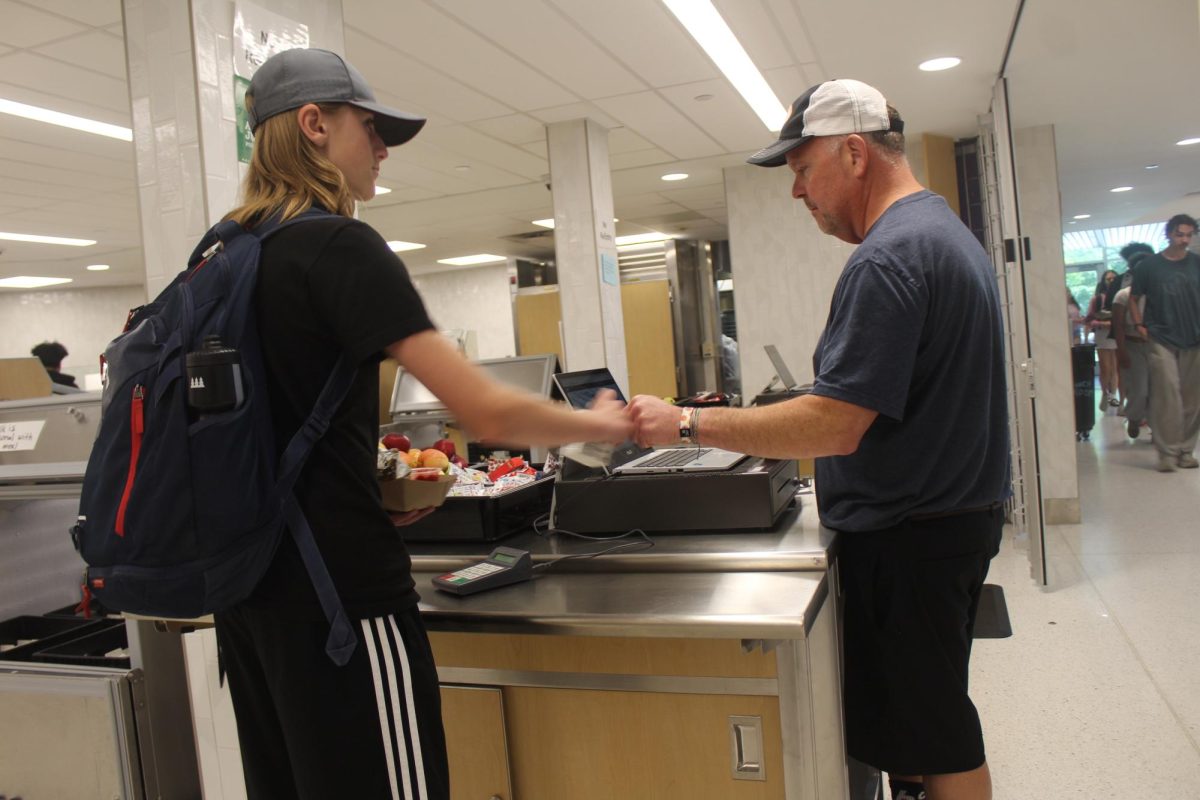
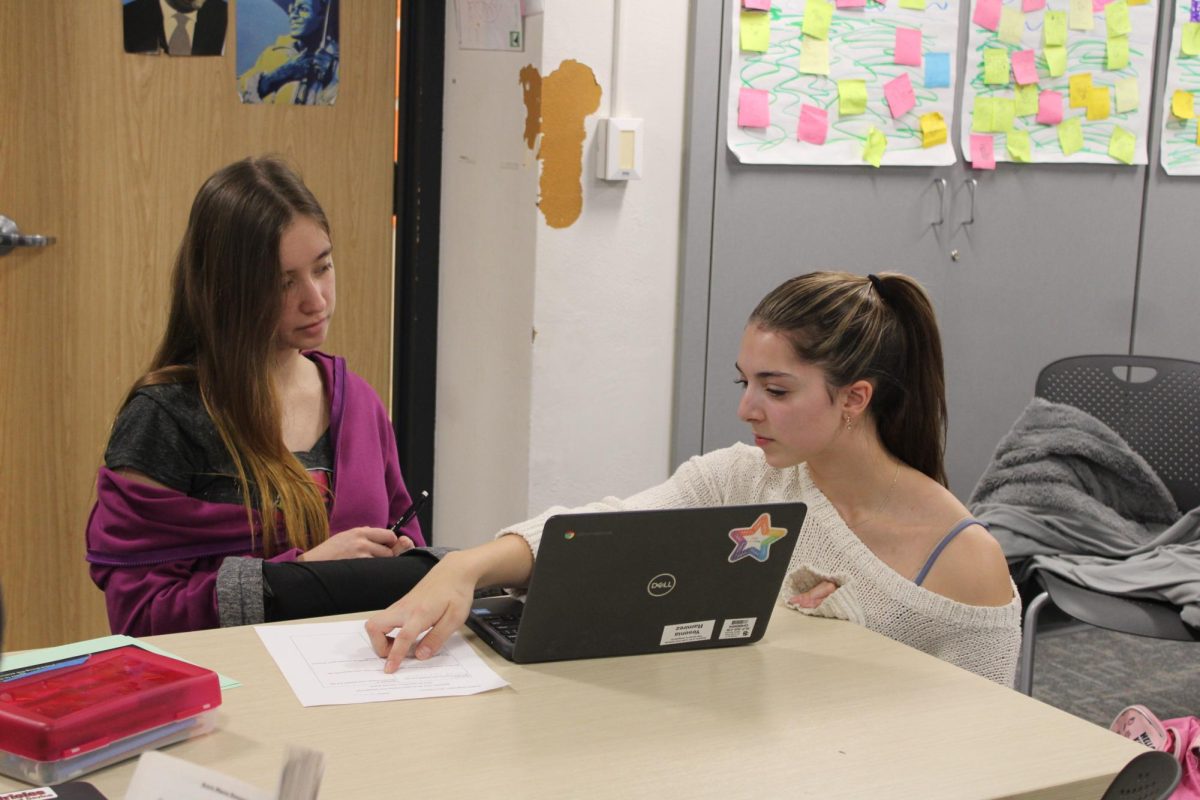
This year, with the addition of Advanced Placement Human Geography as a required course for ninth grade students, juniors and seniors were given the opportunity to take the class and serve as instructional assistants. Although the instructional assistants (IA’s) have been in place for less than one semester, the program has had lasting impacts on classroom environment and productivity.
Junior Adeline Berg, an instructional assistant, said the primary goal of the position is to help freshmen adjust to the more demanding environment of an AP class. She said instructional assistants make a point of being available to assist freshmen when they have questions or need help with their work.
“We are trying to help out the freshmen because it’s most likely their first AP class,” Berg said. “We’re there for some extra support if they have questions or they need help in general because it can be hard to get used to.”
According to AP Human Geography teacher Kyle Smestad, instructional assistants have had a positive impact on the classroom work atmosphere. He said they enhance lesson flow and provide essential support.
“There’s the component of having extra support that generally helps the class run more smoothly,” Smestad said. “(My instructional assistants) have stepped up in some pretty cool ways that have really helped out the flow of the class.”
Freshman and AP Human Geography student Cooper Richardson said having an upperclassman instructional assistant for guidance is extremely beneficial for those new to a high school environment. He said having access to advice from an older, more experienced student has been valuable.
“Having an upperclassman as a gateway into high school has been great,” Richardson said. “It has helped me get to know a lot of people and get great tips on what it means to be a high schooler.”
According to Smestad, the position has been a nice opportunity for upperclassmen to set a good example for freshmen. He said their close age gap is a benefit to the relationships they build with the students as leaders.
“It’s nice for ninth graders to have some sort of peer to look up to,” Smestad said. “Upperclassmen are really good peers because they’re closer in age (to the freshmen), so it’s nice for them to have them as role models.”
Berg said there is a process to become an instructional assistant, and the teachers in charge of selection conducted meetings to determine whether or not the student would be strong fit for the position.
“I had to apply and answer some questions about myself and why I thought it would be a good fit,” Berg said. “Then I had to schedule an interview with the teachers in the social studies department.”
Smestad said he plans to develop more meaningful tasks for his instructional assistants as the year progresses. He said he aims to give them more purposeful roles in hopes of making classroom work more efficient.
“My hope as we continue to go through some of the units, and get the flow of the class, is that we can continue to be more intentional about what (the instructional assistants) are doing,” Smestad said.
Berg said she chose to become an instructional assistant because of the job’s academic and social benefits. She said upon applying, she hoped to interact with the freshmen, as well as have access to a college-credit-bearing course.
“I thought that it would be a unique opportunity (being an instructional assistant), and I know a decent amount of freshmen, so I figured I would have a relationship with them already,” Berg said. “It’s also nice to have the opportunity to get college credit through the AP exam.”
According to Richardson, being an instructional assistant would be fairly enjoyable. He said the program would be improved if the assistant had prior experience with the class, and if that were the case, then the assistant could create more connections.
“It would be fun to be an instructional assistant,” Richardson said. “It might be a bit different once they get instructional assistants who have taken the class before, and then they might be able to interact with the students more.”
Smestad said the program has been successful so far, yielding positive results for his ninth grade students and for him. He said since his teaching career has involved primarily working with freshmen, he has enjoyed collaborating with older students who demonstrate greater maturity and academic focus.
“I’ve seen some really cool relationships form between (students and instructional assistants in) some of the classes,” Smestad said. “It’s also a great opportunity to work with upperclassmen because I teach mostly freshmen, so it’s nice to work with some self-starters and people who are into education.”